

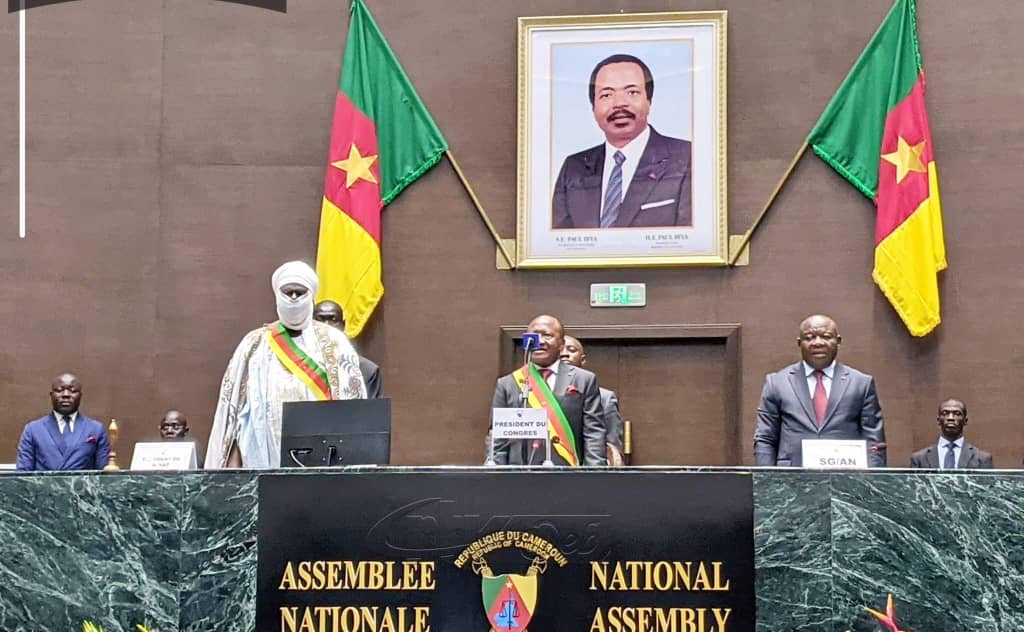
The Cameroonian Parliament convened in Congress on April 2, 2026, at the Palais des Verres Paul Biya in Yaoundé for its sixth session of its kind. The main objective is to amend the Electoral Code, particularly concerning the mandate of municipal councilors. This revision takes place in a particularly sensitive political context.
The work of this parliamentary congress is under the joint chairmanship of Cavaye Yeguié Djibril, President of the National Assembly, and Marcel Niat Njifenji, President of the Senate. At the center of discussions is a bill to amend Article 170 of the Electoral Code. This amendment would give the President of the Republic the power to extend the term of municipal councilors.
This provision is part of an effort to readjust the national electoral calendar. Parliamentarians will examine and vote on this bill until April 5, the scheduled closing date of the congress. The final vote in plenary session will determine whether the amendment will be adopted or rejected.
The initiative to amend the electoral code is generating diverse reactions. Some political actors denounce a maneuver aimed at indefinitely extending the mandate of local elected officials, while others believe that this is a necessary measure to ensure the stability of institutions. Civil society, for its part, is calling for a thorough reform of the electoral system to ensure free, transparent and credible elections.
In a context of recurring debates on the organization of elections and the management of electoral mandates, this parliamentary session is closely followed by political observers. The decisions that will be taken could have significant consequences on the functioning of local authorities and on the national political calendar.