

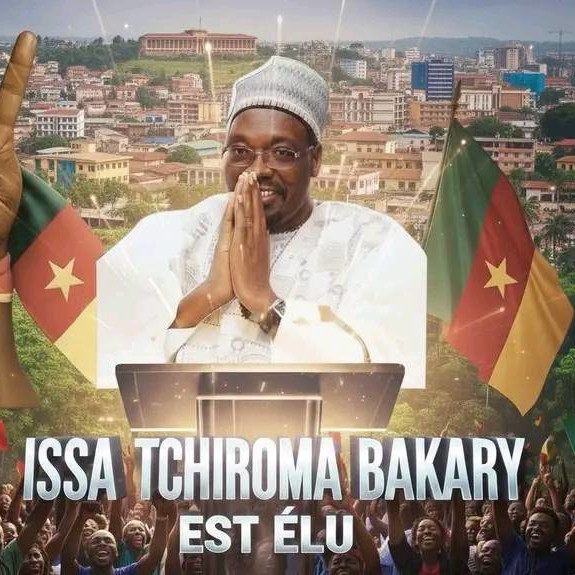
In a tense political climate in Cameroon, marked by the disputed presidential election results of October 12, 2025, opposition figure Issa Tchiroma Bakary used a message of well-wishing to the Muslim community to claim victory. This move, following Ramadan, transforms a religious message into an act of political claim, exacerbating the memorial tensions surrounding the election.
Tchiroma Bakary, presenting himself as the "President-elect of the Republic of Cameroon," thanked the Muslim community of Cameroon, the diaspora, and Muslims worldwide for their prayers. The message insists that prayers were raised in national mosques and in Mecca for the restoration of "the truth of the ballot box," thus referring to the contested presidential election.
This strategy of anchoring in Islamic rite mobilizes strong symbols such as purification, self-control, and solidarity, values presented as the foundation of civic engagement linked to religious faith. The text also recalls the coincidence of Ramadan with the Christian Lent, constructing a narrative of inter-community harmony to strengthen the moral legitimacy of contesting the election results.
By addressing Muslims during a unifying rite and mentioning prayers in Mecca, Issa Tchiroma Bakary seeks to capture strong symbolic capital and confer a transnational spiritual blessing on his claim. The use of the title "President-elect" is seen as an attempt at legitimization by word, outside of Cameroonian constitutional channels.
However, this strategy risks increasing tensions and further fragmenting the political landscape, by superimposing spiritual and partisan allegiances. The systematic use of religion as a vehicle for electoral claims could reshape community balances, with the risk of institutionalizing a double discourse of legitimacy.
Paul Biya, the outgoing president, was declared the winner of the election with 53.66% of the vote, while Tchiroma obtained 35.19%. The official results were contested by Tchiroma, who denounced a lack of transparency and called for greater transparency. Demonstrations erupted across the country, some resulting in clashes with security forces. Issa Tchiroma subsequently fled to Gambia where he was granted asylum.