

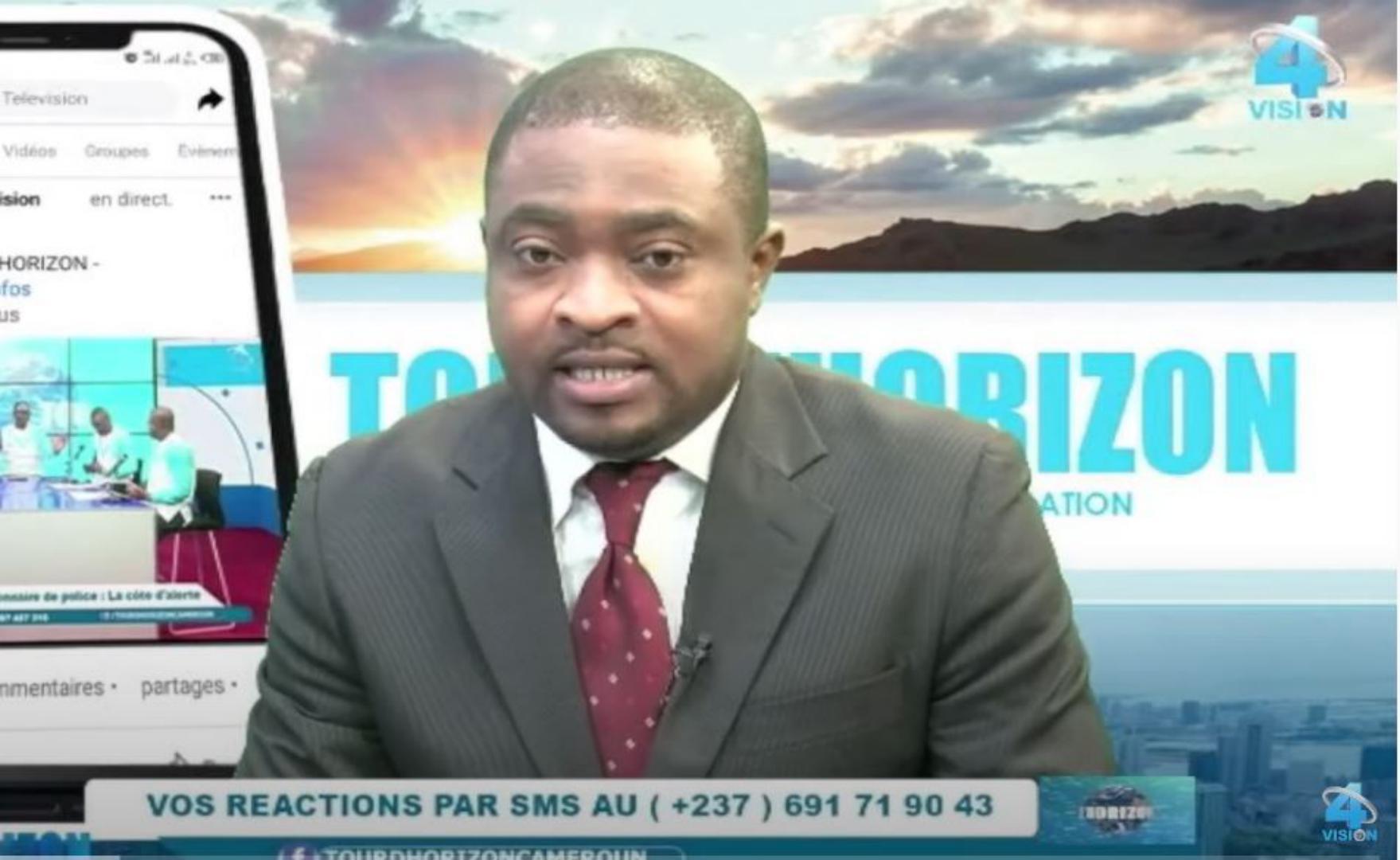
The debate surrounding Paul Biya's succession continues to fuel passionate discussions within the Cameroonian political scene. As a guest on the "Tour d'Horizon" program on Vision 4, Martial Owona shared his analysis regarding the role of the vice president in the Cameroonian political system. According to him, this function is more related to a governance issue than to preparing for the presidential succession, an interpretation that relaunches the debate.
Martial Owona expressed the idea that current interpretations are based on a misunderstanding of the Head of State's intentions. He stated that, contrary to what many Cameroonians think, the vice president is not there to resolve the issue of Paul Biya's succession, but rather to respond to a governance problem. This perspective thus shifts the debate to institutional issues.
Owona insists on the specificity of the Cameroonian political system. For him, those who evoke the succession do not know Paul Biya well enough. He added that this position comes to solve the problem of high instructions in Cameroon, emphasizing that the function of vice president would primarily aim to improve the functioning of the state apparatus rather than prepare for a political transition.
The question of the vice presidency in Cameroon is a recurring topic of debate. In April 2026, the Cameroonian parliament approved a constitutional amendment restoring the position of vice president, an initiative seen by many as a response to growing uncertainties regarding the presidential succession. However, the opposition has expressed concerns about increased centralization of executive power.
Some analysts believe that the reintroduction of this position, abolished in 1972, aims to ensure a smooth transition in the event of the president's death, resignation, or incapacity. According to the new provisions, the vice president would be appointed and dismissed by the president, and would exercise presidential functions for the remainder of the seven-year term in the event of succession. However, they would not be able to initiate constitutional reforms or run in subsequent elections.
Critical voices, such as that of Joshua Osih, president of the Social Democratic Front, believe that this amendment risks accentuating the dominance of the executive instead of strengthening democratic guarantees. Others point out that the appointment of the vice president by the president concentrates power in the hands of one person, instead of going through an electoral process.
The clarification provided by Martial Owona thus refocuses the debate on the importance of governance and the functioning of the State, beyond considerations related to the presidential succession. The future will tell whether this interpretation will prove accurate, or whether the position of vice president will become a power issue in the perspective of the post-Biya era. The appointment of the president's son, Franck Emmanuel Biya, to the position of vice president has fueled speculation about a dynastic succession.