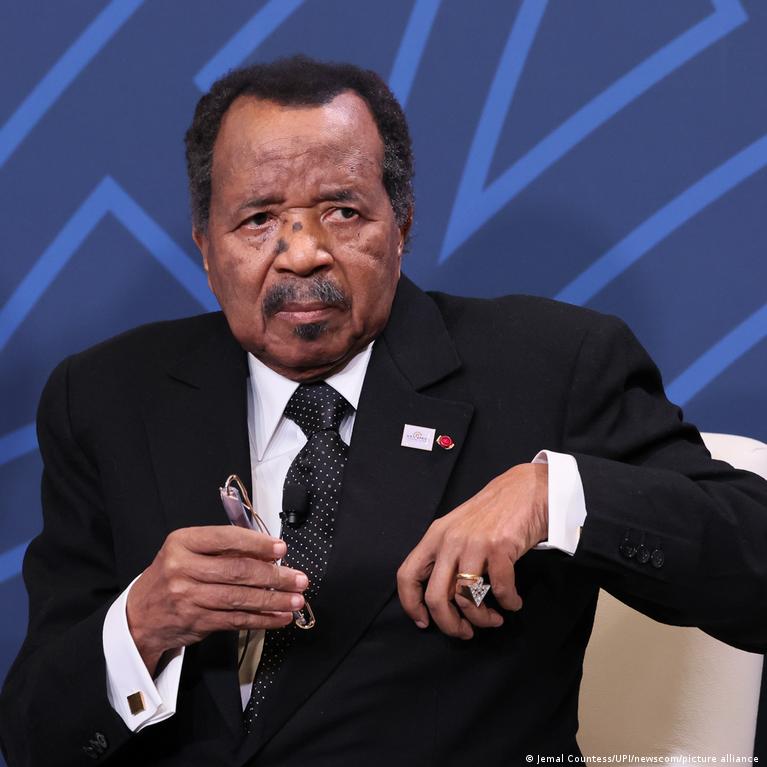
In Cameroon, President Paul Biya has marked 43 years in power, a longevity he shares with his party, the Rassemblement Démocratique du Peuple Camerounais (RDPC), created on March 24, 1984. This year also marks the 41st anniversary of the RDPC, a party that, according to some observers, was born in power, with Paul Biya already at the head of the country at the time of its creation.
The National Assembly, largely dominated by the RDPC, recently voted to extend the mandate of the deputies until December 20, 2026. This decision, officially justified by the lack of financial means to organize new elections, has aroused mixed reactions. The public-owned daily newspaper, Cameroon Tribune, reported the promulgation of the related law by President Biya, following its adoption by the National Assembly.
In the Eastern region, in Bertoua, the Minister of Public Service and Administrative Reform, Joseph Lé, also Head of the Permanent Regional Delegation of the Central Committee of the RDPC, called for a general mobilization to ensure new victories for the party. His speech highlighted the institutional advances in favor of the executives of the region, while recognizing the electoral underperformance and insisting on militant discipline.
At the same time, in Sanaga Maritime, Ngallè Bibéhè has undertaken to mobilize troops for the next elections. During the celebration of the 41st anniversary of the RDPC, he reviewed the participation of local sections in the presidential election and laid the groundwork for future victories of the party in the upcoming local elections.
Paul Biya, 92, was re-elected for an eighth term in October 2025, extending his rule. His long reign has been marked by a firm grip on power, sparking criticism of the erosion of democratic institutions and the repression of the opposition. Despite calls for change, Biya remains a dominant figure in Cameroonian politics.