


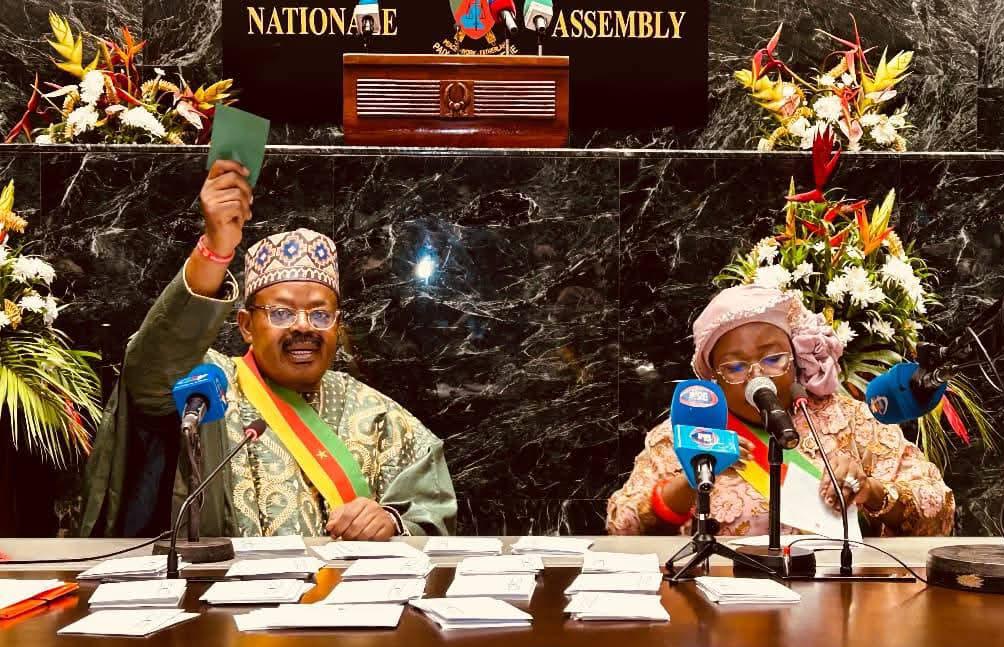
Cameroon's Parliament has approved the creation of a Vice-President post, a major constitutional amendment following hours of debate. Meeting in congress, the deputies and senators voted in favor of the bill, marking a significant evolution in the organization of executive power in the country.
The bill, presented by the Minister of State, Minister of Justice, Laurent Esso, introduces this new function within the government apparatus. The Vice-President will be appointed by the Head of State, a provision that sparked lively discussions in Parliament. Part of the opposition had argued for a joint election of the President and Vice-President, but this proposal was ultimately not adopted.
The vote largely approved the constitutional revision project. Out of all the parliamentarians, 200 voted in favor, while 18 opposed and 4 abstained. This result reflects majority support for this reform, which modifies the institutional mechanisms in force in Cameroon.
The introduction of a Vice-President post is a notable development for Cameroon. This function could play a crucial role in the event of a vacancy of power, adding an additional level to the structure of the state.
The Cameroonian Constitution of 1972 had already been revised in 1996 and 2008. The addition of a Vice-President marks a new stage in the country's institutional evolution. This decision could have significant implications for political stability and succession to the presidency.
The approval of this constitutional revision opens a new phase in the organization of executive power in Cameroon. It remains to be seen how this new post will be integrated into the political landscape and what impact it will have on the country's governance.
The precise role and responsibilities of the future Vice-President will need to be defined. Their influence will depend on the relationship they have with the incumbent President and their ability to exercise leadership within the government.