

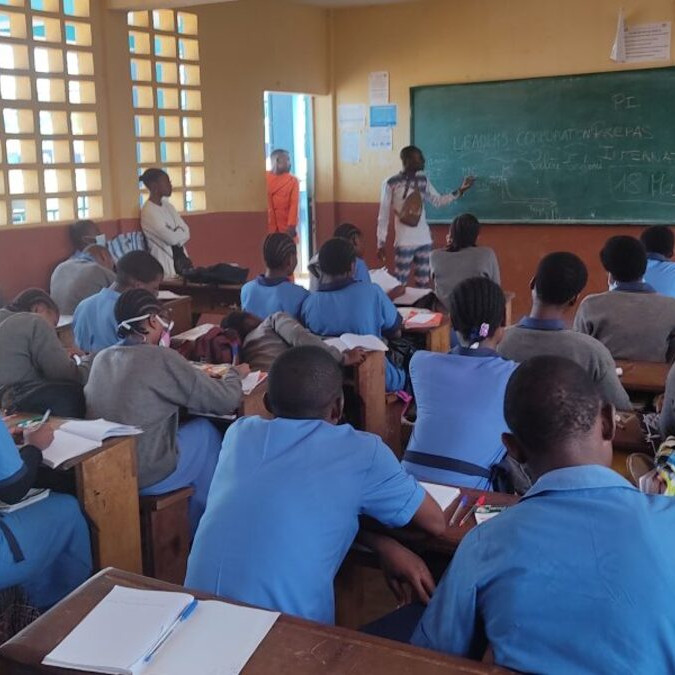
On March 28, 2026, a shocking incident occurred at a technical high school in Dziguilao, in Cameroon's Far North region. The school's principal, Djongmo Dourandi, violently assaulted a teacher, Mrs. Kaltoufaya, by hitting her on the head with a beer bottle. The assault took place during a general assembly, in front of witnesses, and led to the teacher's emergency evacuation to a hospital.
According to internal sources, the principal even publicly claimed impunity after the incident, a sign of a possible drift within the Cameroonian school administration. This act of violence raises serious questions about the state of authority and the management of schools in Cameroon.
This assault is not an isolated case, but rather a symptom of a deeper problem: institutional violence in Cameroonian schools. A culture where criticism is seen as a threat and where recourse mechanisms are ineffective, particularly in remote regions. The principal, in this model, wields quasi-discretionary power over his staff, fostering a climate of impunity.
Impunity, in this context, is fueled by several factors. The geographical isolation of schools located in peripheral regions such as the Far North, where reports of abuse are slower to surface and less likely to be successful. The culture of silence, where teachers fear professional retaliation if they denounce their superiors. And the absence of visible disciplinary jurisprudence, which perpetuates the perception that abuses go unpunished.
This case highlights the need for a swift, firm, and transparent response from the Ministry of National Education. An immediate suspension of the principal, the opening of an administrative investigation, and support for the victim would send strong signals to the entire teaching staff. The absence of a reaction, on the contrary, would reinforce the principal's sense of impunity and worsen the situation.
Protecting teachers from hierarchical abuse is essential to ensure the attractiveness of the profession and the quality of education in Cameroon. A teacher who lives in fear of retaliation cannot perform their job in the best conditions, which penalizes students. The implementation of anonymous reporting mechanisms, regular independent inspections, and public disciplinary jurisprudence are necessary reforms.
Beyond the legal aspect, this case raises a fundamental question about the values transmitted by a school where conflicts are resolved through violence. It is imperative to restore the moral authority of the institution by protecting victims rather than perpetrators. The integrity of the Cameroonian education system is at stake.