

Following the Cameroonian Parliament's adoption of the constitutional reform reintroducing the post of vice-president, opposition figure Maurice Kamto has voiced his concerns. The reform, adopted on April 4, 2026, modifies the rules of presidential succession and grants President Paul Biya, 93, the power to appoint and dismiss the vice-president.
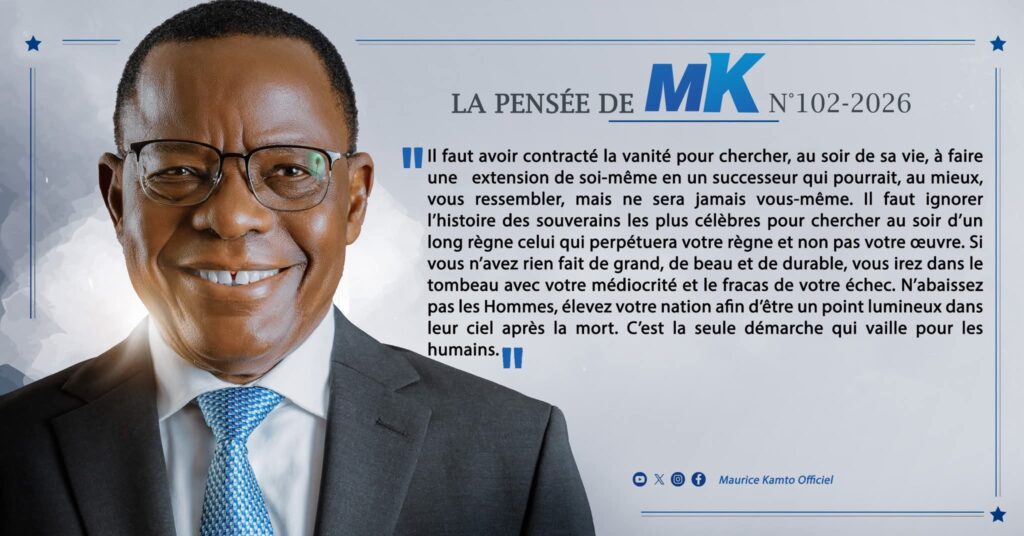
Kamto shared his reaction on social media, criticizing the initiative as belated and questioning the logic of succession at the head of state. In his April 6, 2026 post, he wrote: "One must have contracted vanity to seek, at the evening of one's life, to make an extension of oneself in a successor who could, at best, resemble you, but will never be yourself". He added that it is better to leave lasting achievements than to try to organize one's own succession.
The constitutional reform was adopted by Parliament with 200 votes in favor, 18 against and 4 abstentions. It stipulates that the vice-president will be appointed and dismissed by the president, and that his term may not exceed that of the head of state. In the event of a presidential vacancy, the vice-president will serve as interim president for the remainder of the term.
Government supporters present this reform as a way to strengthen institutional continuity and avoid a crisis in the event of a power vacuum. The opposition, however, sees it as a consolidation of power by President Biya, who has led Cameroon since 1982. Some, like Kamto, denounce a "constitutional coup". They believe that the priority should be to organize free and transparent elections, rather than to put in place a succession system controlled by the president.
This reform comes amid growing political tensions in Cameroon, marked by post-election disputes and questions about President Biya's succession. The introduction of a vice-president could significantly alter Cameroon's political landscape, but it also raises concerns about the concentration of power in the hands of the head of state.
The amendment specifies that the powers of the vice-president will depend on the authority delegated by the president. The text also clarifies the legal status of the office: the vice-president is subject to the same incompatibility rules as the president, falls under the jurisdiction of the High Court of Justice in specific cases, and must declare assets.
Paul Biya's appointment of the vice-president is eagerly awaited and could provide a clear indication of the government's intentions and the country's political future.