

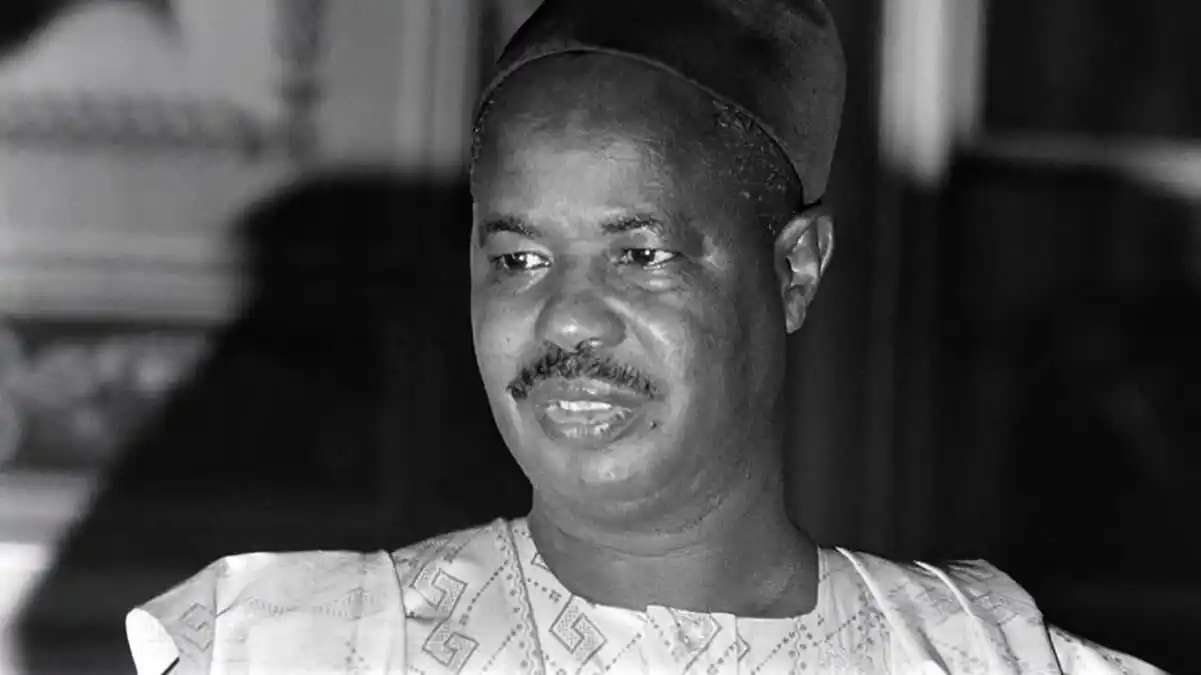
Ousmanou Magadji explores the relationship between Cameroon's first president, Ahmadou Ahidjo, and the Bamileke people, a dynamic that is essential to understanding the country's political history.
"No one can govern this immense country without the contribution of the Bamileke people," Ahmadou Ahidjo stated, according to his wife, Germaine Ahidjo. This statement, even when made in a specific context, still resonates today. The Bamileke people, known for their dynamism and entrepreneurial spirit, have always been a driving force in the Cameroonian economy.
Cameroon, with its more than 200 ethnic groups, tribes and clans, presents a complex cultural mosaic, sometimes marked by ancient antagonisms. In this context, building a united State represents a major challenge. Ahidjo's success lies in his ability to navigate this ethnic diversity, using his knowledge of different cultures to build the State and forge a nation.
When choosing his successor, Ahidjo ruled out the option of a Bamileke, fearing that their ardent nationalism would undermine relations with the former colonists. He favored Paul Biya, a Bulu perceived as more malleable, despite the reservations of his wife Germaine. Ahidjo thought he could guide Biya, a prospect he considered less likely with a Bamileke. Germaine Ahidjo revealed that her husband considered Paul Biya to be non-tribalistic, bilingual and without compromising political antecedents. Other potential collaborators, such as Samuel Eboua, were dismissed because of their prejudices against the Bamileke.
Ahidjo believed he was making the best choice for Cameroon's future. With hindsight, it is possible to question this choice, but it is more constructive to focus on correcting the mistakes of the past and consolidating the gains.
Ousmanou Magadji stresses the need to move beyond tribalism to build a more inclusive Cameroon. He calls for reflection on the accession to power of personalities from other regions and ethnic groups, not as an identity claim, but as a symbol of national unity.