

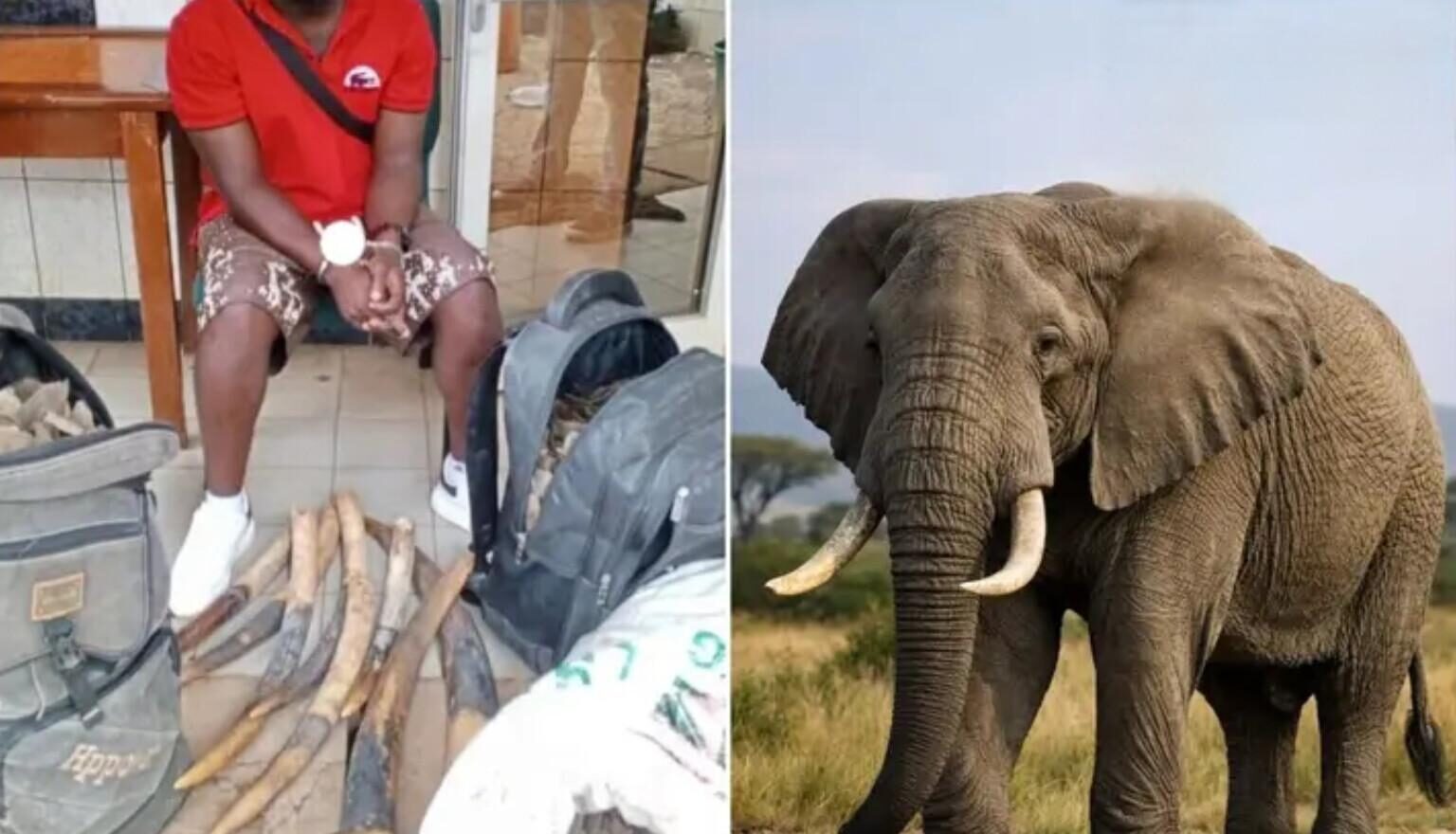
A 28-year-old man was arrested in Yaoundé, in the Ekoumdoum district, by officers fighting against the trafficking of protected species. He was in possession of an illegal shipment including elephant tusks and giant pangolin scales.
According to reports, the suspect was transporting eight elephant tusks concealed in sacks of grain, as well as 52 kilos of giant pangolin scales. The whole lot was hidden in the trunk of a taxi, in an attempt to evade controls. The individual was posing as a cocoa merchant but is believed to be involved in a trafficking network of protected species operating between Djoum, Mintom and the Republic of Congo.
Elephants and pangolins are among the fully protected species in Cameroon. Poaching and illegal trade in these species contribute to biodiversity loss in Central Africa. Cameroon is a source, transit, and export country for products from endangered wildlife. Its geographical location, with porous borders with countries like Congo, Nigeria, Gabon, and the Central African Republic, makes it a hub for trafficking.
Penalties for trafficking these animals or their derivatives can be severe, with sentences of up to 20 years in prison and heavy fines. A new law in 2024 has strengthened sanctions against wildlife crimes. Section 173 of this law stipulates that anyone found guilty of killing, possessing, or marketing protected wildlife is liable to imprisonment of 15 to 20 years and a fine of 20,000,000 to 50,000,000 FCFA, or both.
Despite awareness campaigns and enforcement operations by the authorities, poaching and trafficking of pangolins remain a concern. Dozens of pangolins are believed to have been killed in the past year. Cameroon is home to three species of pangolins, all fully protected: Phataginus tetradactyla, P. tricuspis, and Smutsia gigantea. The Mbam and Djerem National Park is an important refuge for these species.
The fight against wildlife trafficking remains a major challenge, requiring increased support for conservation efforts, capacity building for government agencies, and international cooperation. Organizations such as LAGA (The Last Great Ape) and WWF are collaborating with the Ministry of Forestry and Wildlife (MINFOF) to enforce the law and deter criminals.
In March 2026, eight wildlife traffickers were sentenced to various prison terms, demonstrating efforts to strengthen wildlife law enforcement.