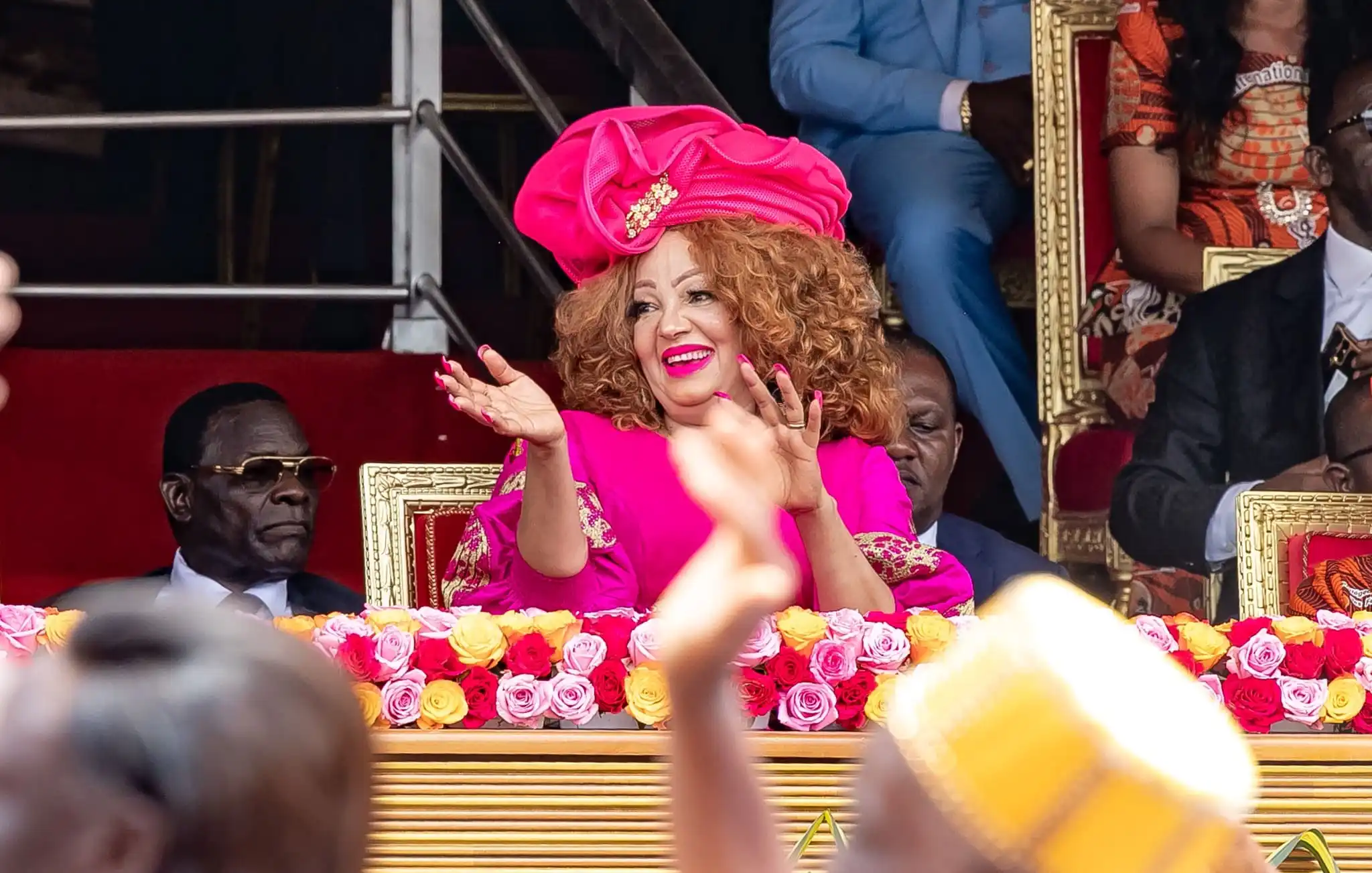
The celebration of International Women's Day on March 8, 2026, in Cameroon, was marked by controversy regarding the role of the First Lady, Chantal Biya. Political analyst Koupit Adamou raised questions about the legitimacy of her presence at the head of the official ceremony, arguing that she holds no official status allowing her to preside over a republican event.
Koupit Adamou expressed his concerns during the "Canal Presse" program on Canal 2 International, stressing that there is no constitutional or legal basis to justify Chantal Biya's function in the organization of state public activities. According to him, her role is limited to that of the wife of the Head of State. "Madame Chantal Biya is the wife of the President of the Republic, period," he declared.
Chantal Biya's participation in the March 8 parade, as she traditionally does, has revived the debate on the institutional role of the First Lady in Cameroon. Although her presence has become a custom over the years, some observers believe that the lack of official status for the function of First Lady poses an institutional problem.
Chantal Biya has been the wife of President Paul Biya since April 23, 1994. She is known for her humanitarian commitments through the Chantal Biya Foundation, created in 1994, which works to combat poverty, disease and exclusion. She is also the founder of African Synergies Against AIDS and Suffering, a non-governmental organization involved in the fight against HIV/AIDS and the improvement of living conditions for rural women in Africa.
Despite her many activities and influence, Chantal Biya holds no official position in the Cameroonian government. Her role is seen by some as that of an unofficial advisor to the President, capable of influencing political decisions.
The controversy raised by Koupit Adamou highlights the issue of the place and role of First Ladies in African political systems. While some see them as important figures of representation and social action, others question the legitimacy of their influence in the absence of an electoral mandate or clearly defined status. The debate remains open in Cameroon, where tradition and political realities confront the requirements of transparency and good governance.
In the meantime, Chantal Biya continues to carry out her charitable activities and represent Cameroon at certain international events. She has been designated UNESCO Goodwill Ambassador for Education and Social Inclusion, in recognition of her commitment to the fight against social exclusion.