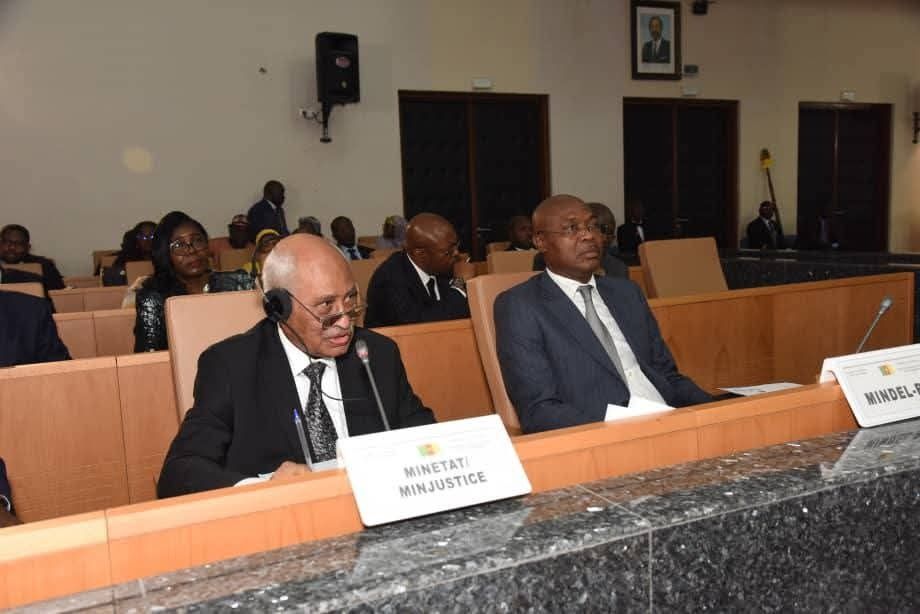
The Cameroonian Senate adopted a significant reform of the Constitutional Council on April 7, marking an important step in modernizing the legal framework of this key institution. This revision primarily aims to provide crucial clarifications regarding the procedures to be followed in the event of a vacancy at the head of state, a particularly sensitive subject for the country's institutional stability. The bill was defended before the senators by the Minister of State, Minister of Justice, Laurent Esso.
The reform comes in a context of broader institutional adjustments, notably with the recent creation of the post of vice-president. The stated objective is to consolidate the continuity of the State and ensure the regular functioning of the executive institutions, by anticipating and framing situations of crisis or uncertainty.
Presented in plenary session under the chairmanship of His Majesty Aboubakary Abdoulaye, the bill was carefully examined by the senators. Before being put to the vote, the text was the subject of an in-depth analysis in the Committee on Constitutional Laws, with a report presented by Senator Aminatou Ngangoube. This step paved the way for discussions in plenary session, where each article was scrutinized before final validation.
The law of April 21, 2004, which until now framed the functioning of the Constitutional Council, needed to be updated to meet contemporary challenges. The adopted reform introduces more explicit rules in the event of the resignation of the head of state or permanent incapacity duly noted. The objective is clear: to avoid any institutional uncertainty in these delicate circumstances, by providing a precise and secure legal framework.
By clarifying the mechanisms of succession and strengthening legal certainty around institutions, Cameroon intends to protect itself against the risks of deadlock or political crisis. This reform of the Constitutional Council is therefore part of a logic of consolidating the rule of law and institutional stability.
The Constitutional Council plays an essential role in the Cameroonian institutional landscape. In particular, it is responsible for verifying the constitutionality of laws, ruling on electoral disputes and guaranteeing respect for fundamental rights and freedoms. Its modernization is therefore a major issue for democracy and good governance.
The adoption of this reform by the Senate marks an important step, but the legislative process is not yet complete. The text must now be examined and adopted by the National Assembly before being promulgated by the President of the Republic to enter into force.