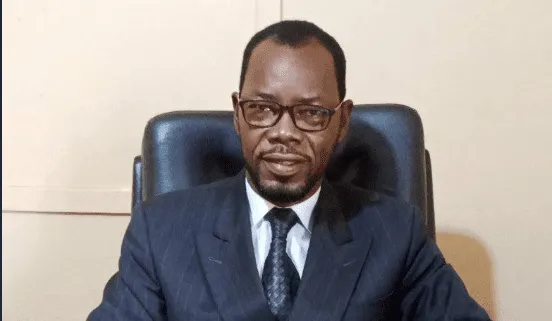
Cameroonian lawyer Emmanuel Simh has publicly expressed his doubts about President Paul Biya's ability to initiate the necessary reforms in Cameroon. This statement was made during his appearance on the Canal Presse program on Canal 2, where he shared his critical analysis of the current political situation.
According to Simh, the advanced age of the Head of State is a major obstacle to the implementation of significant changes. He illustrated his point by using a striking metaphor: "There is an artist I like very much who said that you cannot straighten a smoked fish because it will break". This image, relayed by Lebledparle.com, suggests that trying to force radical change at this stage would be counterproductive and could further weaken the country.
Simh explicitly linked his skepticism to Paul Biya's age, stating: "President Paul Biya has reached an age where he doesn't like noise very much. People his age don't like to be jostled. You can't ask Paul Biya to create change. It's not possible". These remarks highlight a perceived lack of will or energy on the part of the president to undertake ambitious reforms.
As an activist of the MRC (Movement for the Renaissance of Cameroon), one of the main opposition parties, Emmanuel Simh's stance is part of a context of recurring criticism of the regime in place. The opposition and part of Cameroonian civil society regularly call for profound political, economic and social reforms to address the challenges facing the country. These challenges include, among others, the security crisis in the English-speaking regions, economic difficulties and governance issues.
Simh's statements come at a time when the expectations of the Cameroonian population for change are high. However, his analysis suggests that he does not believe in the ability of the current president to initiate this change from the top of the state. This stance risks fueling the debate on the need for political change and the prospects for the future of Cameroon.
Emmanuel Simh's intervention highlights the persistent tensions within the Cameroonian political scene and the challenges the country faces in meeting the aspirations of its population. His point of view underscores a skepticism about the possibility of change driven by President Biya, hinting at the complexity of the current political situation in Cameroon.